
Kidde Smoke and Carbon Monoxide Detector: Complete Guide


Key Takeaways
A combination alarm can make home safety simpler, but it still needs thoughtful placement, regular testing, and timely replacement.
- A combination detector watches for both smoke and carbon monoxide.
- Placement matters because smoke and carbon monoxide move differently.
- Beeps, voice alerts, and flashing lights can signal different conditions.
- Testing and battery checks should become part of a household routine.
- A detector supports an escape plan; it does not replace one.
What Is a Kidde Smoke and Carbon Monoxide Detector?

Smoke/CO detector is a combination device that warns about two potential threats: smoky fires and carbon monoxide, which is a toxic gas. Kidde smoke and CO detector may be either battery operated or wired depending on the particular type and installation location in the house.
Combining smoke detection with CO detection makes it possible to better monitor sleeping rooms and common areas of a house. A smoke and CO detector serves a different purpose from a security camera, so it can be useful to think of both as separate parts of a broader home-safety setup.
For example, an outdoor security device such as the Ring Floodlight Cam Wired Plus can help monitor exterior areas, while a smoke and CO alarm focuses on indoor fire and carbon monoxide warnings.
However, smoke and CO need attention for different reasons. While the former may be visible, the latter does not have any color or smell, hence its undetectability without an alarm.
Therefore, the detector should be treated only as a device that helps to warn about the threats but not a tool that allows neglecting safety practices.
It is necessary to choose the appropriate device based on such criteria as the source of energy supply, the lifetime of the batteries, mounting place, the relevance of the voice alarms, and so forth.
The available range of CO detectors includes such types as plug-in, wired, battery-operated, and smart detectors. Prior to purchasing, I would check local regulations.
How Does a Kidde Smoke and Carbon Monoxide Detector Work?

A combination alarm utilizes sensors for detecting both smoke and carbon monoxide and subsequently triggers an alarm if either level hits the level required by the alarm.
It is not easy to describe all models in terms of their methods of detecting the presence of smoke and carbon monoxide or the nature of the alarm. Hence, the manual for each particular model should be consulted when installing one in your house.
Most combination alarms have some kind of an audio signal in addition to flashing lights. Some combination alarms even come with spoken messages such as “Fire!” or “Warning! Carbon Monoxide.”
The DETECT Combo Smoke + CO Alarm is a perfect example of a 10-year battery-powered alarm with a voice feature that warns you about fire or the presence of carbon monoxide.
The alarm itself is just a small component of a complete fire safety system, which implies that I will have to maintain clear access paths, know at least two routes to get out of a bedroom and understand what the alarm is trying to convey.
How to Install a Kidde Smoke and Carbon Monoxide Detector
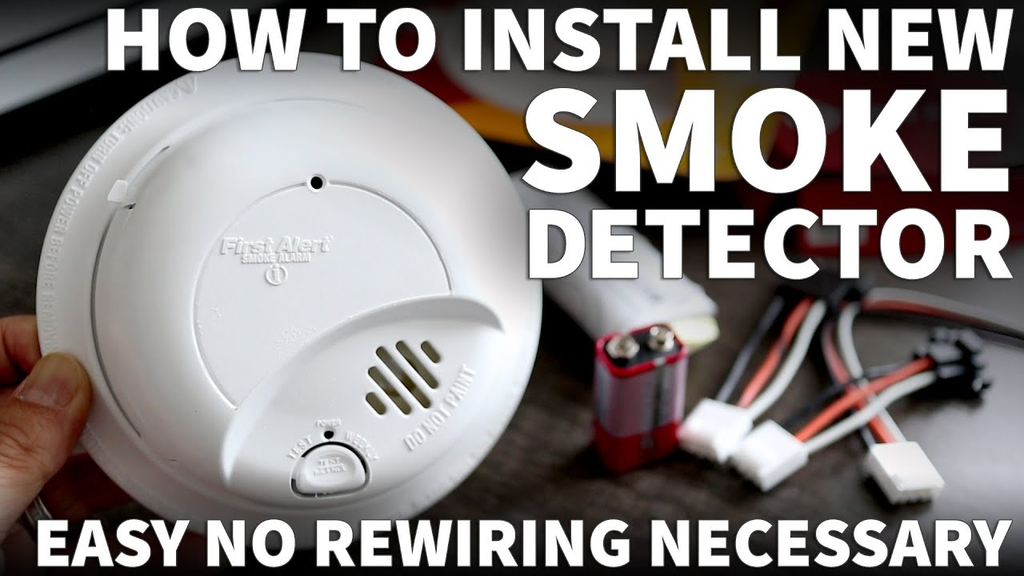
The installation influences the speed of detection of a threat and hearing of the alarm. First, I will read instructions of the particular unit, examine its power source, and pay attention to the layout of the house. The following information will be helpful, but it does not contradict the manufacturer’s instruction or any other local regulations.
Where Should You Install a Kidde Detector?
Detectors need to be installed near the sleeping quarters, on all levels of the house, as well as in those places where people spend much time.
An alarm needs to be heard from the bedroom and accessible for testing without any dangers to health. Carbon monoxide detectors are especially necessary near the places with fuel burning devices, but they should not be installed in the places where usual activities of the device can influence their work.
To ensure that no place is missed, it is enough to do the following check:
- Install coverage near bedrooms so sleeping occupants can hear an alert.
- Put appropriate protection on every level of the home.
- Keep the alarm where its sound and indicator lights are not blocked.
- Follow the manual’s distance and mounting guidance for the exact model.
After placing the units, I walk through the house and listen from closed bedrooms. That practical check often reveals a weak spot that a floor plan alone does not show.
💡 Quick Placement Checklist
Install coverage near bedrooms so sleeping occupants can hear an alert.
Put appropriate protection on every level of the home.
Keep the alarm where its sound and indicator lights are not blocked.
Follow the manual’s distance and mounting guidance for the exact model.
Where Should You Avoid Installing It?
I stay clear of places that are too dusty, steamy, humid, drafty, or smoky, except when the instructions explicitly permit such places.
Kitchens, bathrooms, garages, unfinished attics, and places right next to heaters or cookers tend to trigger nuisance alarms or disrupt sensing. The aim is not only to look for a spot on the wall; it is to look for an area with clean air and reliable sound.
I also ensure that the devices are kept away from any vents, fans, windows, and corners with poor air circulation.
Even when a place is convenient but causes the device to set off false alarms, I don’t just ignore the alarm. Instead, I check the positioning and refer to the manual or enhanced alarms offered by the manufacturer.
How to Mount the Detector
After ensuring the right mounting hardware is selected and the surface will be able to secure it properly, I start working. The installation process of battery-operated devices tends to be somewhat easier compared to hardwired ones since the latter may sometimes require electrical work.
If you are also installing other connected devices around the home, our guide on how to install a smart doorbell provides additional guidance on planning the installation and choosing an appropriate mounting location.
Here are the key installation points you should compare:
Once mounted, I check that the alarm is seated correctly and that no protective packaging remains in place. A secure installation is helpful, but it is not complete until the device has been tested.
Testing the Detector After Installation
Next, I push the test button after installation and listen to the alarm sound. I also verify whether there is light or voice indication as per the instructions, and do the same test again from sleeping areas if possible.
In case the sound is faint, missing, or otherwise different from what is indicated in the instructions, I stop the testing process and find out what is wrong.
It should be done on the schedule mentioned in the manual and after changing the battery or doing other maintenance.
I keep an easy reminder on my calendar so that I would not forget about it. This will make sure that the alarm signals properly; however, it will not test all kinds of situations.
What Do the Beeps and Alerts Mean on a Kidde Detector?

The tone in which a detector sounds could suggest that the alarm is ringing, low power, malfunctions, or end of life.
Not all alarms chirp at the same pace as others because they have different patterns. I refer to the written instructions or the fire safety FAQs available for that manufacturer in order to understand the specific sound of the alarm.
I take an alarm sounding smoke or carbon monoxide seriously. In the case of a suspected fire, everybody should exit and notify the authorities while outside. As far as carbon monoxide is concerned, I go outside and wait until I am sure about what is going on inside my house.
Low battery and malfunction warnings should be taken seriously whether there is a risk or not. I change batteries according to the required kind, solve all maintenance issues that can be solved without a professional help and see the age of the device.
Kidde Smoke and Carbon Monoxide Detector Pros and Cons

Though combination detectors can simplify coverage planning, there is no universal format suitable for all rooms and residences. It is necessary to consider the level of convenience in comparison with the limitations of installation, maintenance, and type of signal comprehensible to residents of the house. Below are the pros and cons of this kind of equipment.
Pros
The key advantage lies in its dual function, which allows simplifying coverage planning. Battery-powered versions will come in handy in homes where wiring is impossible, while the ones with longer-lasting batteries can decrease the need in changing batteries frequently. In addition, voice signals, if installed, can make it easier to identify a certain danger.
There are some particular advantages in everyday life:
- One device can alert to both smoke and carbon monoxide.
- Different power options can suit different installation situations.
- Some models provide voice messages alongside audible alerts.
- A long-life battery can reduce scheduled replacement tasks.
Those benefits are most useful when the detector is correctly placed and maintained. Convenience should make good safety habits easier, not encourage me to skip testing or replacement.
Cons
However, a combination unit also has placement constraints, and one single unit cannot offer optimal coverage in every room.
False or nuisance alarm situations may occur if the alarm is placed close to steam, cooking vapors, dust, and air movement. Hardwired installation may also be difficult compared to installing the battery-powered unit.
The learning process associated with alarm settings, battery warnings, and expiration periods is also there. In the event that I move into a house with installed alarms, I will have to establish their age and brand because they might be outdated. An alarm is useful as long as people can recognize it and act accordingly.
Bottom line: convenience should make good safety habits easier, not a reason to skip testing or replacement. An alarm only helps as long as it’s placed correctly, maintained, and understood by the people living in the home.
Is a Kidde Smoke and Carbon Monoxide Detector Worth It?
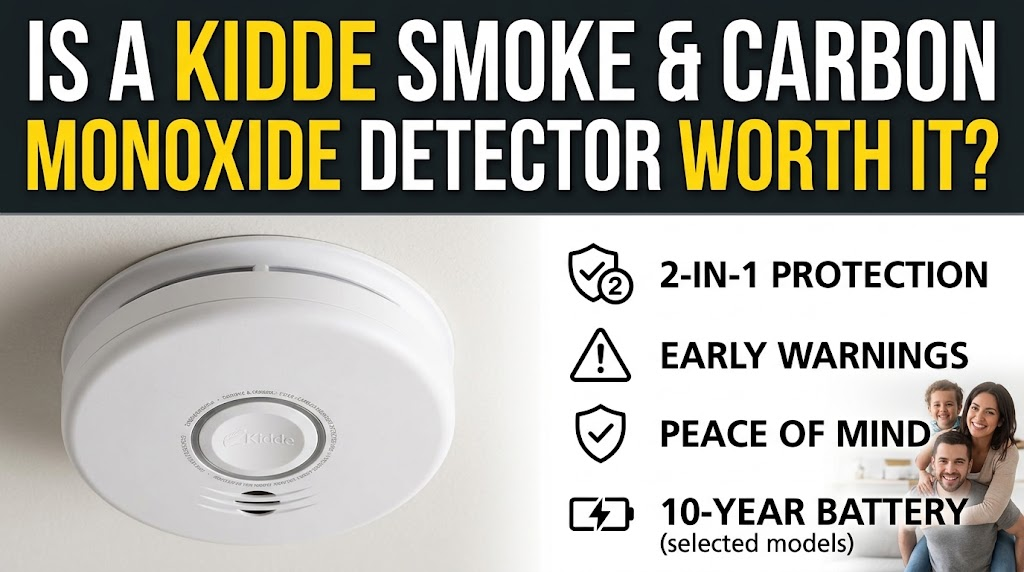
A Kidde smoke and carbon monoxide detector might be an excellent option for some families as it provides two types of warnings. If I am comparing other smart-home devices at the same time, I may also look at products such as the Eufy E340 to understand how other connected home-security equipment approaches monitoring and smart features.
However, a security camera should not be treated as a replacement for a dedicated smoke and carbon monoxide alarm.
In addition, I will compare the instructions for installation provided by the manufacturer with local laws to find out whether it is suitable for the family or not. While the unit with the voice alarms can be the better option for the household where a clear signal is needed, in other cases, only sound and light alarms are necessary.
Finally, my final point will be related to the possibility of everyone in the house hearing the alarm, understanding the signal, and leaving the house. Similarly, people building a connected home may compare other smart devices, such as the Aqara G4, before deciding which products belong in their overall home setup.
Conclusion
A combination smoke and carbon monoxide detector is a practical safety tool when it is installed thoughtfully, tested regularly, and treated as one part of a clear emergency plan. I would focus less on extra features and more on dependable coverage, understandable alerts, and consistent maintenance.
Frequently Asked Questions
Where should a smoke and carbon monoxide detector be installed?
Install alarms near sleeping areas and on every level of the home, following the device instructions and local requirements. Choose locations where the alarm can sense conditions properly and where people can hear it.
How often should a detector be tested?
Test it according to the manufacturer’s schedule, commonly once a month for many household alarms. Test again after installation, battery replacement, or any maintenance.
What does a single chirp usually mean?
A periodic chirp may indicate a low battery, malfunction, or end-of-life warning. Check the manual for the exact pattern before replacing parts or silencing the unit.
What should I do if the alarm sounds?
Treat a full alarm as real, leave the area, and contact emergency services from a safe location. For a possible carbon monoxide event, move into fresh air and do not re-enter until professionals say it is safe.
Can a detector be installed near a kitchen?
It should not be placed immediately beside cooking equipment or where steam and fumes commonly reach it. Follow the model’s placement instructions to reduce nuisance alarms without sacrificing coverage.
How long do smoke and carbon monoxide detectors last?
Many alarms have a defined service life, and the exact replacement timing depends on the model. Check the date and end-of-life guidance, then replace the unit when instructed.
Does a combination alarm replace an escape plan?
No. Every household should know its exits, choose an outdoor meeting place, and practice leaving quickly. The alarm provides warning, while the plan guides the response.


