6 Best Vacuum for Hardwood Floors (2026): 6 Top Picks Tested and Reviewed

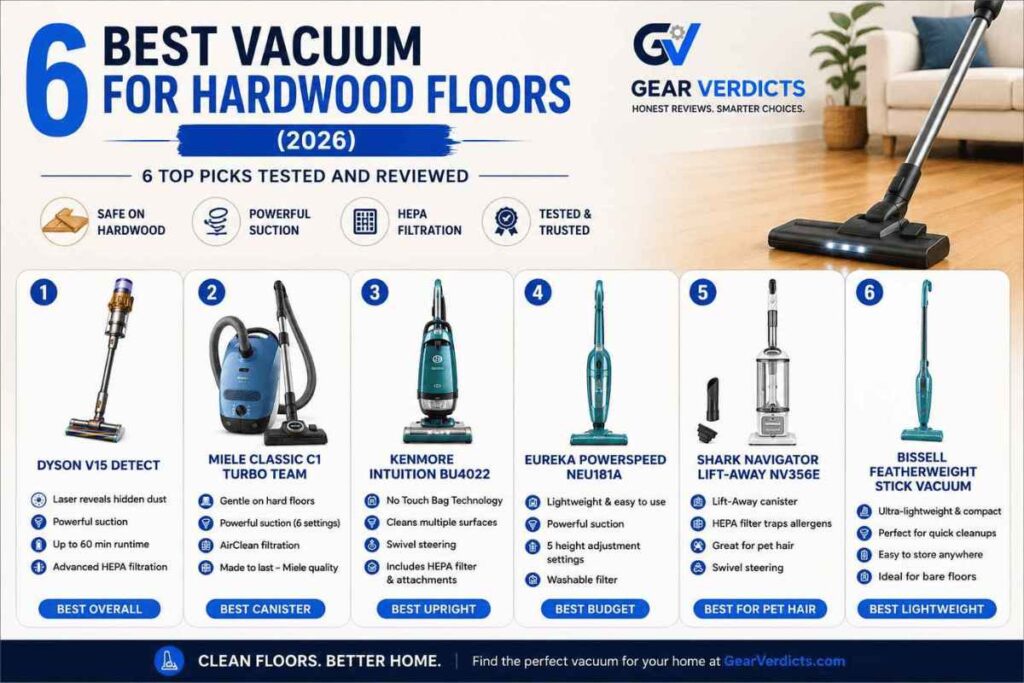
Hardwood is the one floor type where the wrong vacuum doesn’t just clean badly — it can leave marks you’ll live with for years. A carpet-tuned brush roll grinding grit across a sealed finish does more damage than the dust it removes.
I’m Aizaz Shahid, founder of GearVerdicts, and for this 2026 guide I tested six vacuums- corded, cordless, canister, stick, bagged, and bagless- on the things that actually decide hardwood performance: floorhead design, brush-roll control, debris scatter, filtration, and how each machine behaves through a week of repeated daily cleaning, not one maximum-power pass. Every product we recommend is bought at retail with our own money; we accept no manufacturer samples.
My picks below cover sealed hardwood, mixed flooring, apartments, pet homes, and allergy-conscious households, with each model’s real compromise stated plainly, because the best vacuum isn’t the strongest one on paper; it’s the one whose trade-offs fit your home.
Why Hardwood Floors Need a Suitable Vacuum
Hardwood floors expose loose debris instead of hiding it between carpet fibers. Fine grit can remain under a wheel or nozzle edge, while a poorly matched brush roll can scatter crumbs or move abrasive particles repeatedly across the finish. That is why gentle contact, clean wheels, and controlled airflow matter as much as pickup strength.

Different wood surfaces also require different levels of caution. This guide is intended primarily for sealed hardwood and engineered wood floors. If the floor is unfinished, waxed, damaged, or covered by a specialty coating, follow the flooring manufacturer’s cleaning instructions before using a powered floorhead.
Can a Vacuum Scratch Hardwood Floors?
A vacuum can contribute to scratching when grit becomes trapped under the cleaner head, a damaged wheel drags across the surface, or an unsuitable brush roll makes aggressive contact. The vacuum itself is not always the direct cause; maintenance and setup often determine whether the machine glides safely.
Before each cleaning session, inspect the wheels and underside of the floorhead, remove wrapped hair, and use the hard-floor setting or dedicated parquet tool. Stop immediately if the head catches, vibrates unusually, or feels rough against the floor.
Compare models designed for shedding households in our best vacuums for pet hair guide.
Is More Suction Always Better on Hardwood?
No. Strong suction can help pull dust from seams and edges, but maximum power can make a nozzle seal too tightly to a smooth floor or push larger debris ahead of the head. Adjustable suction and a floorhead with the right air channels often produce a more controlled result.
I prefer a vacuum that can clean effectively in a normal or medium setting, with higher power available for crevices, rugs, or heavier debris. This improves maneuverability and can reduce unnecessary battery drain on cordless machines.
Features to Look for in a Hardwood Floor Vacuum
The right features work together. A soft floorhead is less useful when it traps grit, and strong filtration does not compensate for a machine that is too heavy to use regularly. I evaluate the following areas as a complete cleaning system.
Hard-Floor Head or Soft Roller
A dedicated parquet brush or soft roller spreads contact across gentle fibers and helps lift both fine dust and larger crumbs. It is especially valuable on glossy or easily marked finishes because the head is designed for smooth surfaces rather than deep carpet agitation.
Brush-Roll Shutoff
An on/off control lets a mixed-floor upright stop the powered brush when it moves from carpet to bare flooring. This reduces debris scatter and gives the user more control, although the underside still needs to be kept clean.
Suction Control and Floor Modes
Variable suction, automatic power adjustment, or clearly labeled floor modes make a vacuum easier to steer. They also let you match airflow to dust, larger debris, rugs, and narrow floor seams instead of using maximum power everywhere.
Wheel and Nozzle Contact
Smooth wheels, clean nozzle edges, and a head that does not scrape are essential for finished wood. Check the contact points regularly because a small stone or hardened piece of debris can matter more than the material used in the brush.
Weight, Balance, and Steering
A lighter vacuum is easier to carry and reposition, but balance at the handle can be just as important as total weight. Swivel steering, a flexible wand, and a low-profile head improve access around furniture without repeated bumps.
Filtration and Air Sealing
A HEPA filter can be useful for fine dust, pet dander, and allergy-sensitive households, but the airflow path also needs to be well sealed. Bagged systems generally contain debris more cleanly during disposal, while bagless systems require careful emptying and filter maintenance.
Dust Capacity and Emptying
Small cordless bins are convenient for quick cleanups but can fill rapidly with pet hair and larger debris. A large bag or dust cup reduces interruptions, although it may increase the size and weight of the machine.
Cord Length or Battery Runtime
Corded vacuums provide continuous power, while cordless models reduce outlet changes and cord management. Runtime claims should be read carefully because the powered floorhead and high-power modes usually shorten the headline figure.
Edge Tools and Above-Floor Attachments
A crevice tool, dusting brush, upholstery tool, or lift-away pod helps clean baseboards, stairs, furniture, and floor edges. These tools matter because dust often collects where the main head cannot reach.
Maintenance and Replacement Parts
Filters, bags, brush rolls, batteries, and floorhead parts should be easy to obtain for the exact model number. A vacuum that is straightforward to maintain is more likely to preserve airflow and gentle floor contact over time.
| Feature or Specification | What to Look For and Why It Matters |
|---|---|
| Floorhead design | Soft roller, parquet brush, bare-floor tool, or clearly documented hard-floor compatibility. |
| Brush-roll control | A shutoff switch or a dedicated non-aggressive hard-floor head for delicate surfaces. |
| Suction adjustment | Multiple power levels, an automatic mode, or a mechanical control that prevents the head from sealing to the floor. |
| Weight and movement | Comfortable carrying weight, smooth wheels, useful steering, and a head that reaches under furniture. |
| Filtration | HEPA or fine-particle filtration plus a sealed airflow path when dust containment is a priority. |
| Dust collection | A bin or bag large enough for the home, with an emptying method that does not create unnecessary dust exposure. |
| Power format | Cord reach for uninterrupted cleaning or realistic battery runtime with the powered floorhead attached. |
| Tools | Crevice, dusting, upholstery, pet, and lift-away tools that match the home’s edges, stairs, and furniture. |
| Maintenance | Accessible filters and brush areas, clear care instructions, and replacement parts for the exact model. |
| Model verification | The exact model number and in-box tools, because retailer bundles and similarly named versions can differ. |
Use this table to eliminate unsuitable models before comparing extra features. For example, a vacuum without a soft floorhead or brush-roll control may still clean wood, but it deserves more caution than a model designed specifically for bare floors.
How I Test Vacuums for Hardwood Floors
I am Aizaz Shahid, the author and founder behind GearVerdicts, and I test the vacuums I recommend myself. I buy and review products with my own money, do not accept free manufacturer samples, and use each product for at least seven days in real-world conditions before publishing a verdict. You can read the complete process on our How We Test page.
For a hardwood-floor guide, I focus on how the machine behaves during repeated daily cleaning rather than one maximum-power pass. Manufacturer specifications are used for exact technical values, but the ranking depends on usability, floor contact, debris behavior, maintenance, and whether the limitations still fit a real home.
Fine-Dust Pickup
Large-Debris Pickup and Scatter
Floor Contact and Scratch Risk
Edges, Corners, and Furniture
Maneuverability and Carrying
Mixed-Floor Transitions
Filtration and Disposal
Cordless Runtime and Charging
These are practical home tests, not laboratory certification. The purpose is to show which vacuum is easiest to use safely and consistently on hardwood, while keeping technical claims tied to the manufacturer’s current model information.
For battery-powered options, review the best cordless vacuums for pet hair.
The 6 Best Vacuums for Hardwood Floors: Detailed Reviews
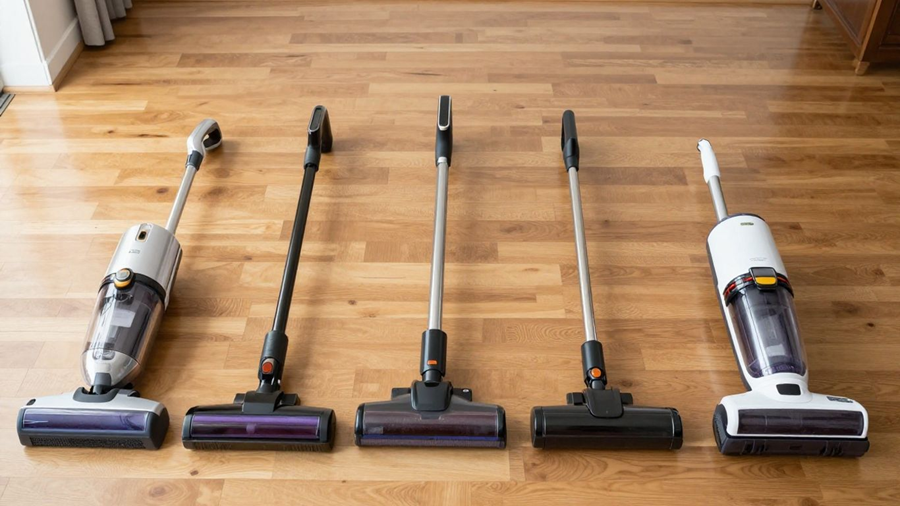
Each review below includes two decision-focused paragraphs, five advantages, three limitations, and a concise final verdict. The recommendations are based on the exact models listed, because small changes in floorheads, filters, batteries, and accessories can materially change hardwood performance.
1. Miele Classic C1 Turbo Team PowerLine SBAN0: Best Overall for Hardwood and Rugs

The Miele Classic C1 Turbo Team is my best overall pick because it gives hardwood a dedicated tool instead of asking a carpet head to handle every surface. The SBB 300-3 parquet brush uses soft bristles for sensitive hard floors, while the six-stage suction selector lets me reduce airflow when a nozzle feels too firmly sealed to smooth wood. Miele lists a 1,200-watt motor, a 29-foot operating radius, a 13-pound body, and a 4.5-liter HyClean GN bag, so it has the reach and capacity for regular whole-home cleaning.
The included STB 305-3 turbo brush expands the machine’s usefulness to low- and medium-pile rugs or carpet, but it is not an electric powerhead for thick carpeting. The bagged design contains debris neatly and the canister moves on three caster wheels, although buyers need closet space and a continuing supply of bags.
This is the strongest choice for a home that values gentle hardwood cleaning, controlled suction, and long-term corded performance over cordless speed.
Pros
- The soft parquet brush is designed for sensitive hard floors and provides more suitable contact than a standard carpet nozzle.
- Six suction levels make the machine easier to match to smooth wood, rugs, upholstery, and crevices.
- The 4.5-liter bag holds substantially more debris than a typical cordless bin and keeps disposal more contained.
- A 29-foot operating radius supports larger rooms without constant outlet changes.
- The turbo brush adds useful low- to medium-pile carpet capability without changing the core hardwood focus.
Cons
- The purchase price and ongoing cost of genuine bags are higher than those of basic bagless models.
- The air-driven turbo brush is not the ideal tool for deep or high-pile carpet.
- A canister body, hose, and separate heads need more storage space than a compact stick vacuum.
Final Verdict
Buy the Miele Classic C1 Turbo Team when sealed hardwood is the priority but the home also contains rugs or modest carpet. It offers the clearest combination of gentle floor contact, suction control, bag capacity, and dependable corded cleaning in this six-model group.
2. Dyson V15 Detect: Best Premium Cordless Vacuum for Hardwood
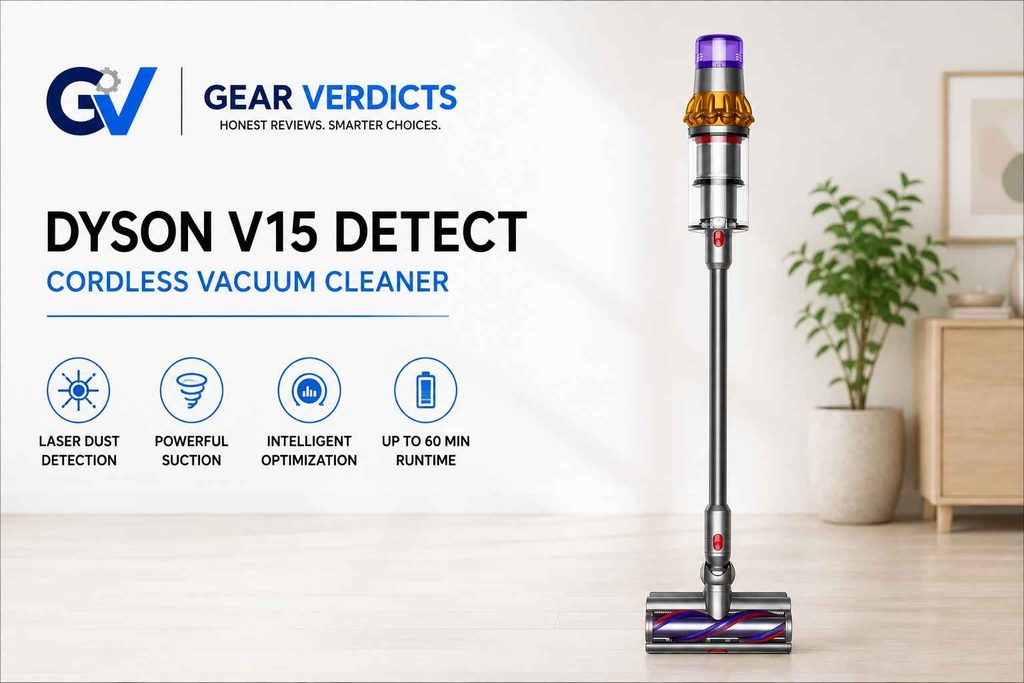
The Dyson V15 Detect is the best premium cordless option here because the Fluffy Optic cleaner head is built specifically for hard floors. Soft nylon and anti-static carbon-fiber filaments collect fine dust and larger debris, while the angled illumination makes dust easier to see across smooth flooring. The machine also uses a particle sensor and Auto mode to adjust suction, with up to 240 air watts available for short high-demand cleaning.
Dyson lists a 6.83-pound weight, a 0.77-liter bin, a 4.5-hour charge time, and up to 60 minutes of maximum runtime, although actual runtime changes with the head, floor resistance, debris level, and power mode. The Digital Motorbar provides mixed-floor capability and hair detangling, but the V15 remains expensive and can feel top-heavy during long handheld use. It is the best fit for buyers who want cordless convenience, visible dust detection, and a dedicated soft hard-floor roller without accepting a budget price.
Pros
- The Fluffy Optic head uses soft materials and illumination to reveal and collect dust on hard floors.
- Auto mode and the particle sensor adjust power instead of forcing maximum suction for every pass.
- The included Digital Motorbar adds carpet and hair-cleaning versatility for mixed-floor homes.
- A sealed whole-machine filtration system helps contain fine particles during cleaning.
- Cordless conversion and multiple tools make stairs, furniture, edges, and quick pickups easier.
Cons
- The V15 costs substantially more than the corded and budget models in this guide.
- The 60-minute figure is a best-case maximum, and powered-head or Boost use shortens runtime.
- The motor and bin sit near the hand, which can feel heavier during extended above-floor cleaning.
Final Verdict
Choose the Dyson V15 Detect when cordless freedom and a premium hard-floor head justify the price. It is especially strong for visible fine dust and frequent mixed-floor cleaning, but larger homes should plan around battery runtime and bin emptying.
3. Shark Navigator Lift-Away Professional NV356E: Best Upright for Mixed Floors
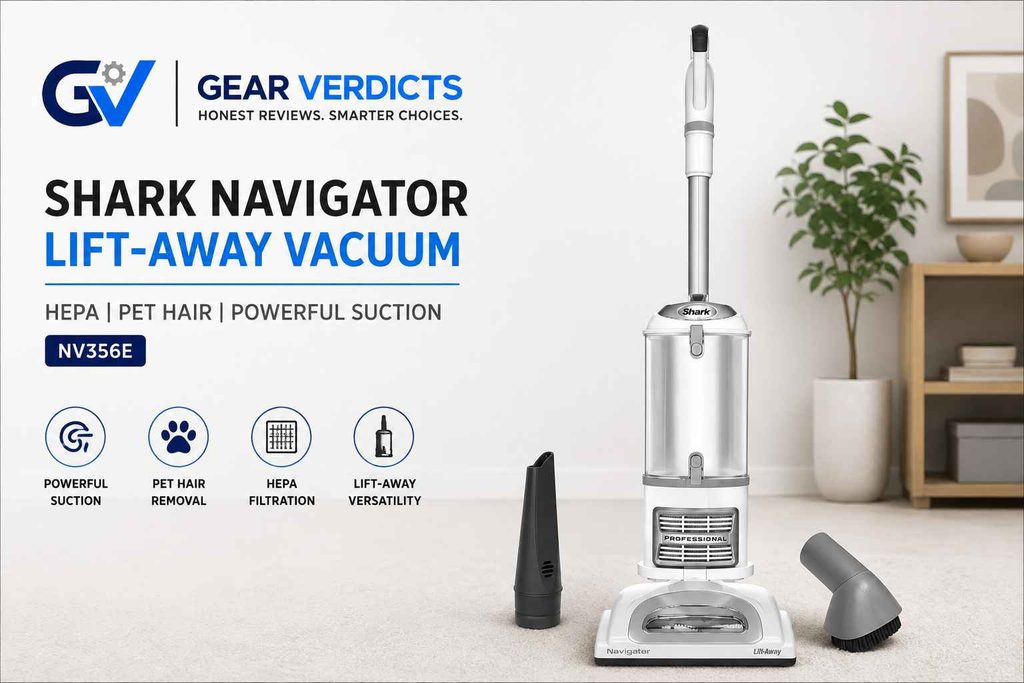
The Shark Navigator Lift-Away Professional NV356E is the best conventional upright here for homes that split cleaning time between hardwood and carpet. Its brush-roll shutoff allows the user to stop carpet agitation on bare floors, while swivel steering helps the head move around furniture. The detachable Lift-Away pod also makes stairs, upholstery, and above-floor areas easier to reach than they are with a fixed upright body.
Shark’s NV355-series support information lists the vacuum at about 12.5 pounds and confirms that the family includes model NV356E. The sealed allergen system and HEPA filtration are useful for dust-conscious households, but this older-style head does not provide the same soft-roller contact as the Miele parquet brush or Dyson Fluffy Optic. It remains a practical corded choice when brush control, filtration, and mixed-floor versatility matter more than the gentlest possible hard-floor head.
Pros
- Brush-roll shutoff provides a clear transition from carpet agitation to gentler bare-floor cleaning.
- Lift-Away conversion improves access to stairs, upholstery, corners, and above-floor surfaces.
- HEPA filtration and a sealed allergen system support better fine-dust containment than basic filters.
- Swivel steering makes a full-size upright easier to guide around furniture and room edges.
- Continuous corded power suits longer whole-home sessions without charging interruptions.
Cons
- The main floorhead is not a dedicated soft roller or parquet brush for highly delicate finishes.
- The upright body and hose system take more storage space than a stick vacuum.
- The dust cup, brush area, and washable filters require regular hands-on maintenance.
Final Verdict
The Shark NV356E is a strong value for mixed carpet and hardwood homes that want one corded upright with brush-roll control and sealed filtration. Choose a dedicated hard-floor head instead when the wood finish is unusually delicate or the home contains almost no carpet.
4. Kenmore Intuition BU4022: Best Bagged Vacuum for Filtration and Clean Disposal
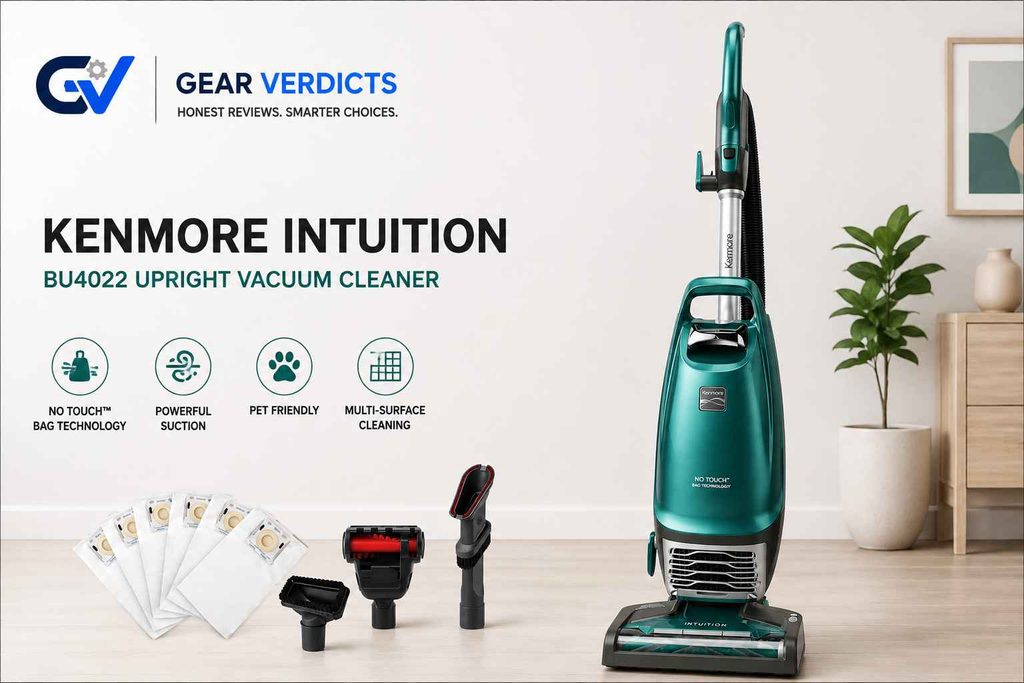
The Kenmore Intuition BU4022 is the best bagged upright in this guide for buyers who want contained disposal and clear hard-floor control. Its brush-roll on/off button lets the user stop the agitator on bare floors, while the sealed AllergenSeal system and HEPA bags are designed to keep fine debris inside the vacuum. No Touch bag release reduces direct contact with collected dust, and PowerFlow technology is intended to maintain airflow as the bag fills.
Kenmore lists a 30-foot cord, an 11-inch nozzle, seven feet of attachment reach, Lift-Up pod conversion, and a weight under 15 pounds. The replacement bags hold about 3.2 liters each, which is generous compared with cordless bins, but they add an ongoing ownership cost. The BU4022 makes the most sense for pet or allergy-conscious homes that prefer a full-size upright and are willing to trade bagless convenience for cleaner disposal.
Pros
- Brush-roll on/off control makes it easier to move between carpet and sealed hardwood safely.
- The sealed HEPA system is designed to trap 99.97 percent of particles down to 0.3 microns inside the vacuum.
- No Touch self-sealing bags reduce the dust cloud that can occur when a bagless cup is emptied.
- Lift-Up conversion and seven feet of tool reach improve stair and above-floor cleaning.
- A 30-foot cord and large-capacity bags support longer cleaning sessions with fewer interruptions.
Cons
- Replacement HEPA bags create a recurring cost and must be kept in stock.
- The full-size upright format is less compact than a stick or small canister vacuum.
- The standard motorized floorhead is versatile, but not as gentle or specialized as a soft parquet tool.
Final Verdict
Choose the Kenmore Intuition BU4022 when filtration, clean bag disposal, and mixed-floor brush control are the priorities. It is a compelling alternative to bagless uprights for pet homes and dust-sensitive users, provided the ongoing bag cost is acceptable.
5. BISSELL FeatherWeight 2033: Best Budget Vacuum for Quick Hardwood Cleanups

The BISSELL FeatherWeight 2033 is the best budget choice for apartments, kitchens, entryways, and quick daily hardwood pickups. It weighs roughly 2.6 to 2.9 pounds on BISSELL’s current product page, uses a 15-foot cord, and converts between a stick vacuum, a handheld unit, and a stair-cleaning configuration. The 9.5-inch path and simple floor nozzle are easy to store and do not rely on an aggressive powered carpet brush.
Its limitations are equally clear. The 0.67-liter cup fills faster than a full-size vacuum, the filtration system is only one stage, and the head does not swivel or provide dedicated edge cleaning. This is a convenient second vacuum or a sensible main cleaner for a small mostly-hard-floor home, but it is not the model I would choose for deep carpet, severe allergies, large areas, or heavy pet-hair accumulation.
Pros
- The ultra-light body is easy to carry, store, and reach for during frequent small cleanups.
- Three-in-one conversion adds handheld, stair, and floor cleaning without a separate appliance.
- The simple floor nozzle is suitable for sealed hard floors and avoids strong powered-brush agitation.
- A corded design provides continuous power without battery aging or charging delays.
- The low purchase cost makes it practical as a secondary kitchen, apartment, or upstairs vacuum.
Cons
- One-stage filtration is not designed for strong fine-particle or allergy containment.
- The 15-foot cord, fixed head, and lack of edge cleaning limit coverage in larger rooms.
- Pickup power, capacity, and carpet performance are modest compared with full-size machines.
Final Verdict
The BISSELL 2033 is worth buying for fast, low-cost hardwood maintenance in a small space. Treat it as a lightweight convenience vacuum rather than a replacement for a sealed HEPA machine or a full-size deep cleaner.
6. Eureka PowerSpeed NEU181A: Best Budget Full-Size Upright for Mixed Floors

The Eureka PowerSpeed NEU181A is the best low-cost full-size upright in this list for buyers who want broad floor coverage and a large bagless cup. Eureka lists a 10-pound weight, a 960-watt motor, a 2.6-liter dust cup, and five brush-height settings for hardwood, tile, rugs, and carpet. Pet and detail attachments store on the machine, which gives it more whole-home capability than the smaller BISSELL stick.
The important hardwood caution is that Eureka’s current specifications emphasize height adjustment but do not clearly list a brush-roll shutoff for this model. I would use the bare-floor setting, keep the wheels and brush area clean, and test the head on an inconspicuous section before using it on a delicate finish. This is a budget mixed-floor upright first and a specialized hardwood vacuum second, so buyers with premium wood flooring should favor the Miele, Dyson, Shark, or Kenmore.
Pros
- The 10-pound body is relatively easy to carry for a full-size upright vacuum.
- Five height settings adapt the cleaner head from bare flooring to different carpet depths.
- A 2.6-liter bagless cup reduces the number of emptying stops during larger cleaning sessions.
- The 960-watt corded motor provides continuous cleaning without battery runtime limits.
- Onboard pet, crevice, and dusting tools add useful above-floor cleaning at a budget price.
Cons
- The official feature list does not clearly identify a brush-roll shutoff for delicate hardwood.
- The standard washable filtration system is less allergy-focused than sealed HEPA alternatives.
- The upright head is less nimble and specialized than a soft roller or dedicated parquet brush.
Final Verdict
The Eureka PowerSpeed NEU181A is a practical budget choice for a home with both carpet and durable sealed hard flooring. I would not make it the first choice for easily scratched or high-value hardwood because its brush system is less controlled than the leading picks.
Which Hardwood Vacuum Should You Buy for Your Home?
The fastest way to choose is to start with the home rather than the brand. Consider floor finish, carpet percentage, pets, allergies, storage, stairs, and how often you want to clean before deciding which set of compromises is acceptable.
Mostly hardwood with a few rugs
Choose the Miele Classic C1 Turbo Team. The parquet brush handles sealed wood, while the turbo brush adds practical rug and low- to medium-pile carpet cleaning.
Cordless convenience and visible fine dust
Choose the Dyson V15 Detect with the Fluffy Optic head. It is the strongest option for frequent quick cleaning, dust illumination, and switching to handheld tasks.
Equal amounts of carpet and hardwood
Choose the Shark NV356E or Kenmore BU4022. Both provide brush control for bare floors and full-size cleaning for carpets, with different bagless and bagged ownership routines.
Allergy-conscious or pet household
Choose the Kenmore BU4022 when contained bag disposal is important, or the Shark NV356E when you prefer a bagless sealed system. Maintain filters and bags exactly as directed.
Small apartment or secondary vacuum
Choose the BISSELL FeatherWeight 2033. Its light body, compact storage, and simple corded design make frequent crumbs and dust easier to manage.
Budget mixed-floor home
Choose the Eureka PowerSpeed NEU181A if broad upright coverage matters more than a specialized soft floorhead. Use the bare-floor setting and take extra care on delicate finishes.
No model should be selected without checking the exact package. The floorhead included in the box can be more important for hardwood performance than the core motor platform or color name used in a retailer title.
For a detailed budget upright breakdown, read the full BISSELL 2252 CleanView Swivel Pet review.
Common Mistakes to Avoid When Buying a Hardwood Floor Vacuum
Most poor purchases happen when one attractive specification is treated as proof of complete hardwood performance. The mistakes below are avoidable when the floorhead, maintenance routine, and home layout are evaluated together.
- Buying only by suction power: High airflow does not guarantee gentle contact or good large-debris pickup. A well-designed hard-floor head and usable power control are more important than one maximum number.
- Assuming every brush roll is safe: Some rollers are designed for carpet agitation, while others use soft material for hard floors. Check whether the brush can be shut off or replaced with a dedicated bare-floor tool.
- Ignoring trapped grit under the head: Even a soft roller can move abrasive particles if it is dirty. Inspect wheels, end caps, and nozzle edges before cleaning valuable or glossy flooring.
- Treating HEPA as the only filtration question: A filter label does not explain whether the full airflow path is sealed or how dusty emptying will be. Compare containment, bags, cup design, and maintenance together.
- Comparing cordless runtime without test conditions: Maximum runtime is commonly measured in a lower-power mode and may not include the powered head. Plan for the mode and attachment you will actually use.
- Buying a retailer bundle without checking the model number: Similar names can include different floorheads, tools, colors, filters, or batteries. Verify the exact SKU and in-box accessories before ordering.
- Choosing a vacuum that is too awkward to use: A powerful machine has little value when it is difficult to carry, steer, store, or empty. Daily usability should be part of the performance decision.
Avoiding these mistakes usually produces a better result than chasing a longer feature list. The best hardwood vacuum is the machine whose verified limitations still fit the home and the floor finish.
How to Vacuum Hardwood Floors Without Scratching Them
A suitable vacuum still needs a careful routine. Follow the sequence below to reduce debris scatter, prevent grit from becoming trapped, and keep the cleaner head moving smoothly across sealed wood.
1. Inspect the floorhead and wheels: Remove hair, grit, hard particles, and damaged components before the head touches the floor. Pay particular attention to wheel channels and the ends of soft rollers.
2. Choose the correct head or mode: Install the parquet or soft-roller head, switch off the carpet brush, or select the manufacturer’s bare-floor setting. Do not assume the previous carpet setup is suitable.
3. Start with controlled power: Use a normal or moderate suction level and increase it only when debris remains. Excessive suction can make a head difficult to move and may reduce control.
4. Vacuum larger debris before dragging it: Approach cereal, stones, tracked grit, or other hard particles slowly. Use the crevice tool or pick up unusually large pieces if the main head pushes them.
5. Use straight, overlapping passes: Move the head smoothly instead of twisting or dragging it sideways. Overlap passes slightly so dust is removed without repeatedly grinding the same debris across the finish.
6. Clean edges with the proper tool: Use a crevice or dusting tool around baseboards and narrow gaps rather than forcing the full head into furniture. This improves pickup and reduces accidental impacts.
7. Stop when contact feels wrong: If the head catches, vibrates, scrapes, or leaves marks, stop and inspect it. Do not continue simply because the vacuum is labeled for hard floors.
This routine takes only a few minutes and can matter more than a premium feature. Consistent inspection and correct floor settings protect both the vacuum and the finish over years of use.
Hardwood Vacuum Maintenance Tips
Fine dust and hair collect around filters, wheels, seals, and brush components even when the floor looks clean. Regular maintenance preserves airflow and prevents the cleaner head from becoming a source of grit or rough contact.
- Empty the bin before debris reaches the maximum line, or replace the bag when the indicator or manufacturer instructions call for it. Overfilled collection systems can reduce airflow and make disposal messier.
- Inspect the roller, bristles, wheel axles, and nozzle edges after hair-heavy cleaning. Cut or remove wrapped fibers only with the machine unplugged or the battery removed.
- Wash filters only when the manual identifies them as washable, and allow them to dry completely before reinstalling. Operating with a damp or missing filter can damage the machine.
- Wipe hard-floor wheels and soft rollers with a clean, dry, or manufacturer-approved cloth. Avoid oils, polish, or cleaners that could transfer residue to the wood.
- Check hoses and air channels when pickup declines instead of immediately increasing power. A hidden blockage can reduce performance and place extra strain on the motor.
- Use replacement bags, batteries, filters, and floorhead parts that match the exact model. Similar-looking parts may not seal, charge, or fit correctly.
A vacuum that is maintained regularly will usually steer more smoothly, contain dust more effectively, and preserve its intended pickup. Maintenance cannot turn a basic model into a premium one, but it prevents avoidable performance loss.
Final Verdict: What Is the Best Vacuum for Hardwood Floors in 2026?
The Miele Classic C1 Turbo Team is the best overall vacuum for sealed hardwood floors in this comparison. Its dedicated soft parquet brush, adjustable suction, large bag, and useful rug tool create the most balanced package for careful corded cleaning across a typical home.
The Dyson V15 Detect is the best cordless alternative when premium price is acceptable, while the Kenmore BU4022 is the strongest choice for bagged filtration and clean disposal. The Shark NV356E provides practical mixed-floor value, the BISSELL 2033 excels at lightweight quick pickups, and the Eureka NEU181A offers affordable full-size coverage with extra caution required on delicate wood.
My recommendation: Start with the Miele for mostly hardwood, the Dyson for cordless convenience, or the Kenmore for bagged filtration. Choose the two budget models only when their smaller feature sets genuinely match the size and cleaning demands of the home.
Frequently Asked Questions
What type of vacuum is best for hardwood floors?
A canister with a soft parquet brush or a cordless stick with a dedicated soft roller is usually the clearest choice for mostly hardwood homes. A mixed-floor upright can also work when it provides a reliable brush-roll shutoff and smooth wheels.
Can I use an upright vacuum on hardwood?
Yes, provided the model is rated for bare floors and the brush roll can be stopped or adjusted appropriately. Keep the wheels and underside clean, and test the head if the finish is delicate.
Is a soft roller better than a normal brush roll?
A soft roller is generally better for fine dust and larger debris on smooth floors because it creates gentler, broader contact. It still requires cleaning because trapped grit can undermine the benefit.
Should I turn off the brush roll on hardwood?
Turn it off when the manufacturer provides that option for bare-floor cleaning. A dedicated soft hard-floor roller is an exception because it is designed to rotate on smooth surfaces.
Do hardwood floors need HEPA filtration?
HEPA filtration is not required for the floor itself, but it can be valuable for homes concerned about fine dust, allergies, or pet dander. A sealed airflow path and contained emptying method matter alongside the filter.
Are bagged vacuums better for hardwood floors?
Bagged and bagless vacuums can both clean hardwood effectively. Bagged models often provide cleaner disposal and larger capacity, while bagless models avoid replacement bags and make the collected debris visible.
Are cordless vacuums powerful enough for hardwood?
Yes. Hardwood usually needs controlled pickup more than extreme agitation, and many current cordless models handle dust, crumbs, and hair well. Check runtime with the powered head and confirm that the package includes a suitable hard-floor tool.
Can a vacuum remove debris from hardwood floor gaps?
Strong, well-directed airflow and a crevice tool can lift dust from seams and edges. Use controlled power and repeated passes rather than pressing or scraping the nozzle into the gap.
How often should hardwood floors be vacuumed?
High-traffic and pet areas may benefit from quick cleaning several times per week, while lower-traffic rooms may need less. Vacuum when visible grit appears because hard particles are more likely to mark the finish when walked on.
Is the Dyson V15 worth it for hardwood floors?
It can be worth the premium when cordless convenience, dust illumination, automatic power adjustment, and the Fluffy Optic head will be used regularly. It is harder to justify when a corded parquet canister already fits the home.
Is the BISSELL FeatherWeight 2033 enough for a whole home?
It can be enough for a small mostly-hard-floor apartment with light debris. Larger homes, thick rugs, allergy concerns, and heavy pet hair usually require more capacity, filtration, reach, and floorhead performance.
What should I check before buying from an online retailer?
Confirm the exact model number, voltage, warranty region, floorheads, tools, filters, battery count, and return policy. Do not rely only on a long marketplace title because bundles and similarly named versions can differ.