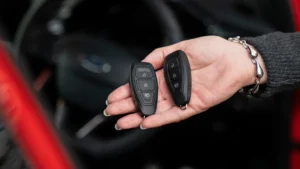
What Is a Key Fob? How It Works, Types, Uses & Everything You Need to Know


I’ve been reflecting about all those little gadgets we use on a daily basis recently – particularly those that we have in our cars.
The key fob, you know! At first glance it appears such a simple thing, but it’s full of tech that make our lives easier. I recall the first time I had a vehicle that required a key fob as opposed to a real key, it seemed so futuristic to me as opposed to my old car with a physical key.
Today, they unlock and lock doors and far more. I wanted to find out what a key fob is, how it works and all the various types available. It’s some pretty interesting stuff and once you get it, you appreciate them even more.
Key Takeaways
- A key fob is a small electronic device that lets you control certain functions of a car or building remotely using radio signals.
- Key fobs work by sending a unique, encoded signal to a receiver in the car or building, which then verifies the code before acting.
- Modern key fobs go beyond just locking and unlocking, offering features like remote start, trunk release, and even keyless ignition.
- There are different types of key fobs, including standard remote fobs, passive keyless entry (PKE) fobs, and smart fobs with advanced features.
- Security is a big part of key fobs, with technologies like rolling codes and encryption making them harder to copy than older systems.
What Is a Key Fob?

Now, what is a key fob? I’ve been pondering this a lot lately, particularly in the changes they’ve undergone. In essence, it’s that little electronic gadget you’ve surely got on your keyring as well the one which will enable you to accomplish that thing with a automobile without putting a key in a lock.
Consider it – you push a button and poof, your car doors unlock, or they lock tight. It’s become such a normal part of life, I hardly even think about it until it doesn’t work.
These aren’t solely for cars, either. I have seen their use in building access – as in my office – and anything from hotel room keys. They are just a little handheld gadget that resembles a digital key and emits a signal to whatever it is supposed to unlock or control.
When you think about the amount of technology contained in this little thing. They have actually replaced the old metal keys in many of the day to day tasks, making them easier and in theory safer.
It seems like we’ve come a long way from a piece of metal to these high-tech pieces of equipment. In the vehicle it is no longer a convenience item but an integral part of the overall security system. It’s all about wireless communication these days.
The core idea behind a key fob is to replace a physical key with an electronic signal. This signal is unique and specific to the device and the system it’s meant to interact with, providing a way to grant or deny access without direct physical contact.
The term “fob” was originally used to describe a small chain or pocket on which to keep items, and these small devices are just that. Now, they’re stuffed full of electronics such as microcontrollers, batteries, and transmitters.
Some even have additional features such as a low-frequency coil that detects proximity, particularly in newer vehicles where you can get close to the car, and the vehicle is able to recognize you. It’s quite different from the old, easy-to-use remotes.
It is the technology that they have inside that makes them so versatile and can be used to perform simple tasks like unlocking and locking the car doors, as well as more complicated functions, such as interacting with the car’s systems.
If you want to know how these signals actually work, it’s a good idea to have an understanding of the tech behind remote keyless entry systems.
How Does a Key Fob Work?

It’s pretty cool when you think about it – this little plastic gadget you have in your pocket is a high-tech gadget that communicates with your car. I used to just think of them as fancy clickers, but there’s a lot more under the hood, or rather inside the fob itself.
The Technology Inside a Key Fob
So what’s included in that little gadget? Typically, this includes a very small microcontroller (also known as the brain of the operation). It contains all the vital codes and logic to enable it to communicate with your car.
There’s also a battery, usually a small coin cell, that provides power for everything. The real magic is in the RF transmitter – that’s what sends the signal out! Other fobs, particularly passive entry, have a low-frequency (LF) coil. This coil provides the detection of proximity to the car, sort of like a wake-up call prior to the signal itself.
What Is RFID and How Does It Power Key Fobs?
You may have heard about RFID—Radio-Frequency Identification. This technology is employed in many key fobs. Radio waves are basically a method of wireless data transmission. Key fobs are particularly prone to this happening in a few ways.
There are low frequency signals around 125 kHz, which assist the car to tell whether the fob is near or not. Then, you press the button and higher-frequency signals, such as 315 MHz or 433 MHz, are sent to the car to carry your command.
Depending upon your location in the world and type of vehicle you drive, the exact frequencies may vary. This wireless communication is the one thing that will allow you to lock and unlock your doors without even getting close to the car.
Also, in buildings with access control, RFID access control is a common approach to providing access using key fobs; proximity transmitter access control systems use a proximity transmitter.
What Are Rolling Codes and Why Do They Matter for Security?
This is where things get really interesting from a security point of view. Some older key fobs may have had a fixed code. So that’s not very secure, is it? Anybody can just make a record of that signal and use it later.
This is because the rolling code is the technology used by most modern car key fobs. Upon button pressing, the fob transmits a code, but not the same code each time. It is a constantly changing sequence, created by a special algorithm.
This algorithm is also known by the car’s computer. So, when it receives a signal, it checks if it’s the next expected code in the sequence. If it is, it is accepted. It is rejected if it is an old code. This renders it extremely difficult to be able to steal your car using your signal.
A smart measure to ensure the safety of the car. The programming of these new car key fobs is a process of matching the unique code with the car’s system.
Step by Step – What Happens When You Press a Key Fob Button
Let’s decompose the magic behind that little button! First, you push a button, or if it’s a passive system, the car simply senses that the fob is in the vicinity. After that, the microcontroller in the fob generates a particular, coded signal.
This signal is sent out via the RF transmitter. This signal is received by the car’s receiver. The computer in the vehicle then verifies the code. It checks to see if it matches what it expects, particularly in a rolling code system.
If the code is correct and the same as what the car is searching for, the computer allows the action to take place. Last but not least, the car carries out the desired task, whether it’s unlocking and opening the doors, or starting the engine, or opening the trunk. The technology is pretty amazing considering the fact that it all takes place in a matter of a fraction of a second.
Here’s a quick look at the sequence:
| Step | Action |
|---|---|
| 1 | User input (button press or proximity detection) |
| 2 | Fob generates encoded signal |
| 3 | Fob transmits signal wirelessly |
| 4 | Vehicle receives signal |
| 5 | Vehicle validates the code |
| 6 | Vehicle performs requested action |
It’s easy to take these devices for granted, but the technology behind them is quite advanced, blending radio communication, encryption, and complex algorithms to provide convenience and security.
Types of Key Fobs You Should Know

What’s happened to the key fobs? I recall the days when it was simply a small lock and key to open and close the doors of my car. There are today all kinds of them, carrying out all kinds of tasks. They’ve certainly come a long way.
Standard Remote Key Fob (Car Lock and Unlock)
This is most likely what comes to the mind of most people first. This is the old fashioned car key fob. You press a button and your car locks up or unlocks.
Sometimes there’s a button for the trunk as well. How they function is by sending a radio signal to your vehicle. It’s quite simple and has been there for a long time, simplifying life a little more than having to fumble for the physical key.
Passive Keyless Entry (PKE) Fobs
These are the ones that make you feel a bit like you’re living in the future. With a Passive Keyless Entry fob, you don’t even have to take it out of your pocket or bag.
As you approach your car, it detects the fob in the vicinity and unlocks the doors. This is very easy to use, particularly when your hands are full.
The car emits low-frequency signals that are picked up before you even touch the door handle, by the fob.
Smart Key Fobs With Push Button Start
These fobs go hand-in-hand with cars that have a push-button start. The fob is your electronic key. As long as it’s in the car, a button can be pressed to start the car.
A few of these intelligent fobs can even recall your settings, such as the seat position or mirror angle you prefer, and reconfigure it automatically upon entering. This is a good touch that makes it more of yours.
RFID Access Control Fobs (Buildings and Offices)
These not for cars, but everywhere I see them. Those miniature plastic pieces that you push against a reader when you want to open your office block or apartment block? Those are the fobs that have RFID chips.
They communicate with the access system by means of radio-frequency identification. They are more advanced than traditional keys as you can set access to others and when they can access, and it’s easier to track access. Not to mention, they are much more durable than an easily broken plastic card with a code on it.
NFC Key Fobs (Near Field Communication)
NFC is a subset of RFID, but has a shorter range of about just several centimeters. Consider the payment methods used on your mobile phone or credit card.
The NFC key fobs are the same. They are used for situations in which close proximity is essential, such as secure access points, and in some cases, for pairing devices. They’re pretty secure, as you have to get right up close to them.
Proximity Card Fobs
The devices are usually confused with fobs for RFID or NFC but they are different. The proximity card fobs are made to be read from a distance of a few inches. They tend to be used in the workplace for time clocks or access control.
They’re a little sturdier than a mere key, and are easily deactivated should they be lost, which is great for security. These may be used for purposes such as building entrances.
The technology behind these little gadgets is pretty neat. They’re not just simple remotes anymore; they’re sophisticated pieces of tech that communicate wirelessly, often using codes that change every time you use them to keep things secure. It’s amazing how much they’ve advanced from just locking and unlocking doors.
Sometimes it’s a little bit of a headache to change the key fob for a modern car, and it can be costly as it’s usually a dealership visit. Knowing what types of fobs you have and what they can do is beneficial before you need to replace them.
What Are Key Fobs Used For?

Were it not for the key fob, I never would have thought of more than just locking and unlocking the doors when I first got my car.
It appeared to be pretty simple, didn’t it? But as it turned out, these small accessories have far more capabilities than I was expecting. Not only has it affected how I use my car to get in and out of it, but now it’s also affected how I interact with my car.
In addition to the lock and unlock, a lot of fobs can pop the trunk or liftgate, which comes in handy when I have my hands full of food at the store.
I also have the remote start function – which has been very convenient at times, particularly on freezing cold winter mornings or in the heat of summer afternoons. Can warm/cool the car before I step outside? That’s a game-changer.
There’s the panic button as well. I hope I don’t ever have to use it, but it’s nice to know that it’s there in case I need it, if something doesn’t feel right, it’s reassuring.
Some newer fobs can even allow the driver to locate his car in a large parking lot; simply press a button and listen to or follow the sound or lights. It’s amazing the amount of technology that goes into such a compact device.
It’s easy to think of a key fob as just a remote for your car doors, but they’ve evolved into a central control for many vehicle functions. From basic security to comfort features and even locating your vehicle, these devices have become indispensable tools for modern drivers.
Not only cars! I’ve seen similar fobs used for building access, such as at my office. You simply tap it on a reader and presto, you’re in.
They can also be employed to drive garage doors or even in security systems. How versatile this technology is – and how it makes everyday tasks easier and safer.
If you’re wondering what all of the specific things a car key fob can do, you should look into the hidden features of your vehicle’s key fob, you may be surprised!
Key Fob Buttons Explained – What Does Each Button Do?

My first time driving the car, I used the buttons on the key fob, but didn’t pay much attention to what they did.
These little gadgets are quite clever, and each of the buttons is for a particular purpose. Most key fobs with an opened car are made up of a few standard buttons and knowing their meaning can make life a bit easier.
Of course the most common button is the Lock button. Once this is pressed, it will secure all doors of your car. The cars, such as my old Honda, may have a “double-tap” that locks the driver’s door when you press it once, but locks all the doors when you press it again within a few seconds.
It’s a small thing but it can be useful if you just need a quick break. More information about certain car models and the important functions of their key fob.
The Unlock button is the next. This one is fairly simple to understand: Push it and your car doors unlock. Typically, all of the doors are unlocked simultaneously with one press.
You may find an option in some systems that unlocks the driver’s door with a single press, but unlocks the rest after it is unlocked the second time, although this is not as common these days.
Some fobs also have a Trunk Release or Liftgate button. This is a godsend if you’re carrying groceries or loading up a big item into the rear.
The trunk opens with a simple press. Easy RF command which communicates with the car’s central locking system to execute functions.
I’m hoping I never need to use one of the buttons—this one is called the Panic Alarm. Press and hold to activate your car’s alarm.
The function is to distract, when you’re feeling threatened or need to “daunt”. It’s a nice security feature, although a little melodramatic.
Some newer cars include more buttons, such as a Remote Start button, which will allow you to start your car from a distance; ideal for warming it up in the winter or cooling it down in the summer.
Others may include an option to turn the lights on or even a “find my car” feature that causes the car to honk or flash lights in a crowded parking lot.
For instance, the Nissan Intelligent Key has a lock button which locks all doors and if held down can sound the alarm. Get more detail on particular features of car keys.
It’s amazing how much technology is packed into such a small device. These buttons aren’t just random icons; they’re direct commands to your vehicle, controlling everything from security to convenience. Understanding what each one does means you’re getting the most out of your car’s features without even needing to pull out the physical key.
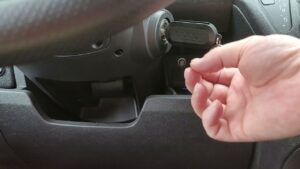
Lastly, there is a small, sometimes concealed, Emergency Key in the fob. This is a backup if you are in trouble.
If the battery in the fob fails or if the fob malfunctions, pop the case off to expose a standard metal key that will still unlock and start the car (although in some instances the fob needs to be held very close to the start button).
Did you ever wonder what those little buttons on your key fob do on your car? From unlocking doors to starting the engine, each symbol has a specific purpose. These features can enhance your driving experience and make it more convenient.
Looking for more information about how to use your key fob? Check out our website for an explanation of all buttons and what they do!
Wrapping It Up
That’s it! The key fob has really become a pretty big deal, from just locking and unlocking doors, to simply starting my car in the cold of the morning, even automatically adjusting my seat.
I sort of just thought, “Oh, this is that little plastic thing that I keep in my keychain,” but it’s actually pretty neat. It’s neat that it’s all wireless and honest it makes life a lot easier.
They’re everywhere these days, I don’t know about you but I’ve seen them in my car, and for me, at least, in the office! These days it’s not a key anymore.
Frequently Asked Questions
What exactly is a key fob?
Think of a key fob as a tiny remote control for your car or even your house or office. It’s a small gadget that uses special signals to talk to a receiver, letting you do things like lock doors, start the engine, or open the trunk without even touching the car or door. It’s basically a modern, electronic version of a key.
How does my key fob actually talk to my car?
Inside the fob, there’s a little computer chip and a transmitter. When I press a button, the chip sends a secret, coded message using radio waves. My car has a receiver that listens for these messages. If the code is right, the car knows it’s me and does what I asked, like unlocking the doors.
Are key fobs safe to use?
For the most part, yes! Newer key fobs use special codes that change every time I use them, called ‘rolling codes.’ This makes it super hard for anyone to copy my signal and get into my car. Older types might be easier to copy, but most modern systems have pretty good security built-in.
What’s the difference between a regular key fob and a smart key fob?
A regular key fob usually just lets me lock and unlock doors from a distance. A smart key fob is more advanced. It often works even if I don’t take it out of my pocket (that’s ‘passive entry’), and it’s what lets me start my car with a push button instead of turning a key.
Can I still use my car if my key fob battery dies?
Usually, yes! Most cars have a hidden physical key inside the fob or a separate key that I can use to unlock the door the old-fashioned way. Once I’m inside, there’s often a specific spot to place the dead fob so the car can still recognize it and let me start the engine.
What happens if I lose my key fob?
If I lose my car key fob, it’s a bit of a hassle, but I can usually get a new one programmed by a car dealer or a special locksmith. For office or building fobs, losing one usually means the security system can simply turn off the lost fob’s signal, so nobody else can use it to get in.
Ready to Choose the Right Smart Doorbell?
Now that you know how to install a smart doorbell, the real question is — which one is actually worth your money? Don’t guess. We’ve tested the top options so you can pick the best one for your setup.
👉 Pro tip: If you want zero monthly fees, start with Eufy. If you prefer Alexa integration, Ring might suit you better.